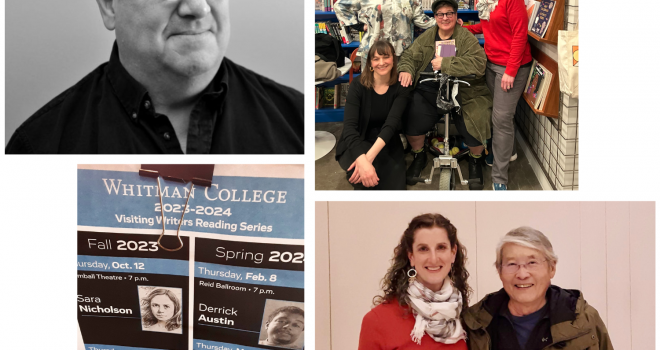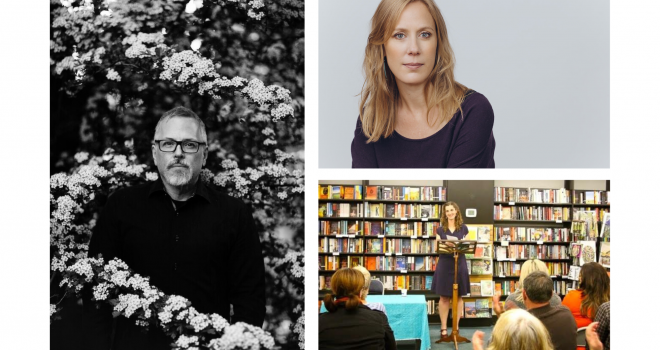
I'm dispatching this week as Artistic Director for the annual Interlochen College of Creative Arts Writer's Retreat. It's 5 days on a beautiful campus between two lakes with 4 faculty and about 32 participants. We gather each day in the Writing House for craft lectures on poetry, young adult fiction, short stories, or memoir and then participants move to their separate classrooms for prompts and deeper discussions within their genre. As Artistic Director, most of my work has been done in advance...and if all goes well, this week I get to help "direct traffic," as they say, and most of all, enjoy the week. I need to troubleshoot and make photo copies and help people find their way from time to time. But at Interlochen, where community is so wedded to who we are and what we create, I also get to check in with people who have been returning for this program for years. I know about their families, their latest submissions of work, their grad school programs or day jobs, etc. In this way, the Writers' Retreat also feels like a reunion. Curious what we're up to? Here's the schedule.
One of my favorite roles at Artistic Director is
When started to pack for 8 weeks in Interlochen, Michigan and its surrounding cities, the first thing I reached for was my books. I'm taking far more than I can finish in two months, but still, I can't part with any of them.
Some books I'm bringing to get autographed (James Arthur's Charms Against Lightning and Louise Hawes' Black Pearls and Rosey in the Present Tense), even though I've already finished reading them. Other books I'm bringing because I hope to run into the authors this summer around Interlochen Center for the Arts or my regional travels (Doug Stanton's Horse Soldiers, Benjamin Busch's Dust to Dust, Molly Atwell's Wild Girls). I've read these as well, but I want to brush up on a chapter or two before hanging out with the authors again.
Other books fall into the "war research" category, including: The Accidental Guerrilla, Fire & Forget, In the Graveyard of Empires, In My Father's Country, and The Places In Between. I need these for reference and will read some of them in full, while others have specific chapters that I rely on as resources.
This weekend I got my first real taste of "book tour living." The whirlwind kicked off with a fundraiser for Carolina Mountains Literary Festival in Burnsville. This event included ticketed-entry for wine tasting and light snacks, and I was happily surprised when a crowd of thirty filled the tiny Burnsville Wine store just a few minutes after event kickoff. Asheville authors Dale Neal and Katherine Soniat read from there work, Charles Price came from the Pensacola side of the mountains, and Abigail DeWitt and myself represented the South Toe Valley. We read for 5 minutes roughly every half hour, and folks mingled and shopped and drank between events. The evening also included beer and brats on the patio!
Less than 12 hours later, my mom and I hit the road for a there-and-back trip to Chapel Hill, where I got to read at the one-and-only Flyleaf Books. Apparently there are
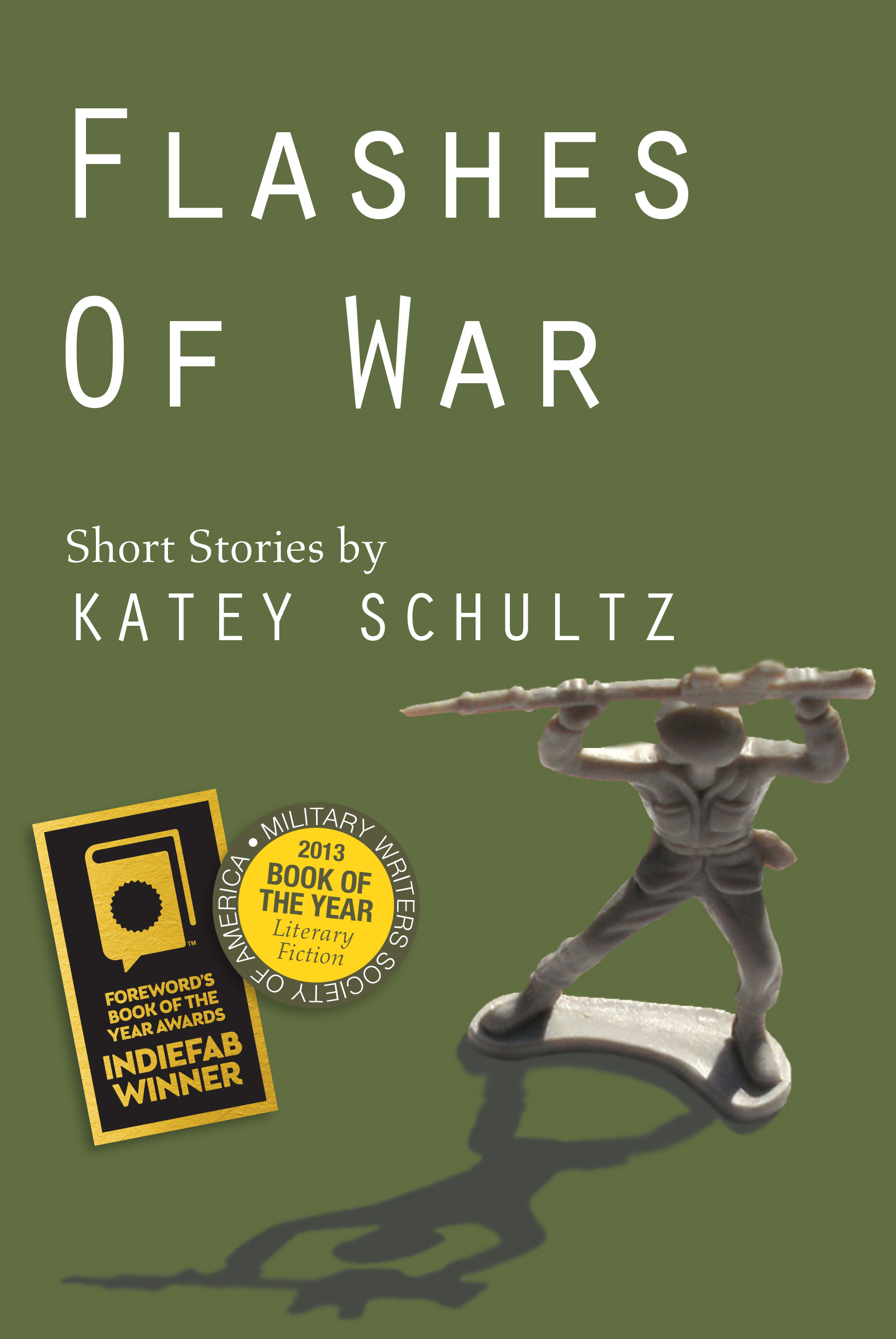
When I was writing Flashes of War, I didn't read any fiction about Iraq and Afghanistan. But I immersed myself fully in many skillfully researched nonfiction books about war, the military, and the Middle East. It was during this time that I came across the work of author Helen Benedict and first read her essays, The Lonely Soldier. Later, I learned that she had also written Sand Queen, another "war" book--only this one was fiction. Intrigued, I reached out to her online and was honored and pleased to get a response. Today, I'm happy to share this brief interview with Helen Benedict on The Writing Life blog. Enjoy--and thanks, Helen, for the incredible writing you've shared and the positive changes that have happened as a result of your work.
From Helen's website: Helen Benedict is the author of six novels and five books of nonfiction. Her latest novel, SAND QUEEN,
set in the Iraq War, is now out in paperback from Soho Press. Culled
from real life stories of female soldiers and Iraqis, SAND QUEEN offers a
story of love, courage and struggle from the rare perspective of two
young women on opposite sides of a war. Helen Benedict's books, SAND QUEEN, and THE LONELY
SOLDIER, along with her articles about the sexual assault of women in
the military, inspired the award-winning documentary, The Invisible War,
shown to acclaim at Sundance, 2012. Benedict's work also inspired a
landmark law suit against the Pentagon on behalf of victims of military
sexual assault, and won the 2010 EMMA award from the National Political
Caucus, the Ken Book Award, and the James Aronson Award for Social
Justice Journalism.
Katey Schultz: You've explored the topic of women in the military through fiction and nonfiction. As you were writing the novel Sand Queen, in what ways did you feel limited or freed up by the genre? Likewise in nonfiction, as you wrote The Lonely Soldier, where did the genre itself limit and free what you ultimately chose to publish?
Helen Benedict: I can best answer this by